


+39 348 9983871


DOVE STA ZAZÀ? UN GIALLO MUSICALE TRA IRONIA E DRAMMA
La sala da concerto Napulitanata aggiunge un nuovo brano al repertorio delle serate: “Dove sta Zazà?”, canzone napoletana classica del 1944 scritta da Raffaele Cutolo, il paroliere, e Giuseppe Cioffi, il compositore, che racconta un vero e proprio giallo musicale. Durante la festa di San Gennaro i due protagonisti del brano, Isaia e Zazà, passeggiano […]
Read MoreElegance beyond clothing
Elegance beyond clothing ‘Nterra Pusilleco! – 1901 Tutto è passato! – 1903 In the Belle Époque, elegance does not end with the outfit. Hats, gloves, jewelry, and hairstyles complete the ensemble and contribute to shaping the image of men and women according to the codes of taste of the era. In the male wardrobe, the […]
Read MoreUommene chic!
Uommene chic! Lo Chic – 1895 I am a polite young man, Gentle and very modest; I rise late and take an hour to get dressed. Costumes of great expense (Of the Parisian model) Make me a true fashion plate Of elegance The protagonist of Lo Chic embodies the figure of the elegant young man […]
Read MoreFeminine elegance
Feminine elegance Vocca ‘e curallo! – 1902 Palummella mia! – 1903 The female image changes along with fashion. The S-bend silhouette, gigot sleeves, and long, bell-shaped skirts define a silhouette constructed according to new standards of elegance. Paris represents a fundamental benchmark of taste, and the new styles spread through the press, advertising, and modern […]
Read MoreThe city and its protagonists
The city and its protagonists Faciteme felice! – 1905 (posthumous publication) ‘Ngiulì! Ngiulì! – 1902 ‘O core d’ ’e ffigliole! – 1901 At the end of the nineteenth century, Naples was crossed by new lifestyles, tastes, and consumption habits. Urban clothing progressively moved away from the distinctive features of traditional dress: suits, jackets, and ties […]
Read MoreThe serenaders
The serenaders Serenata d’’e marenare – 1901 I’ te vurria vasà!… – 1900 Maria, Marì! – 1899 Serenata palazzola – 1903 Canzona bella – 1904 “And then comes Sunday to dress up, primp, beautify oneself, put on the best one has […] and wait for the serenade.” — Francesco De Bourcard The serenade is a […]
Read MoreFemale traditional costume
Female traditional costume ‘A femmena ‘e core! – 1900 Povera abbandunata! – 1902 Marenà, marenà – 1902 Torna Maggio! – 1900 “This civilization of ours is the crazy genius of the world! And when it couples with fashion, oh, the things it does!” — Francesco De Bourcard In the descriptions by Francesco De Bourcard, the […]
Read MoreVincenzo Russo Exhibition – Colophon
COLOPHON 1 The Project On the occasion of the 150th anniversary of the birth of Vincenzino Russo (1876–1904), the Associazione Napulitanata presents a documentary exhibition based on a philological collection of period copielle (printed lyric sheets) and sheet music by the author. As one of the most sensitive figures of classic Neapolitan song, Russo translated […]
Read More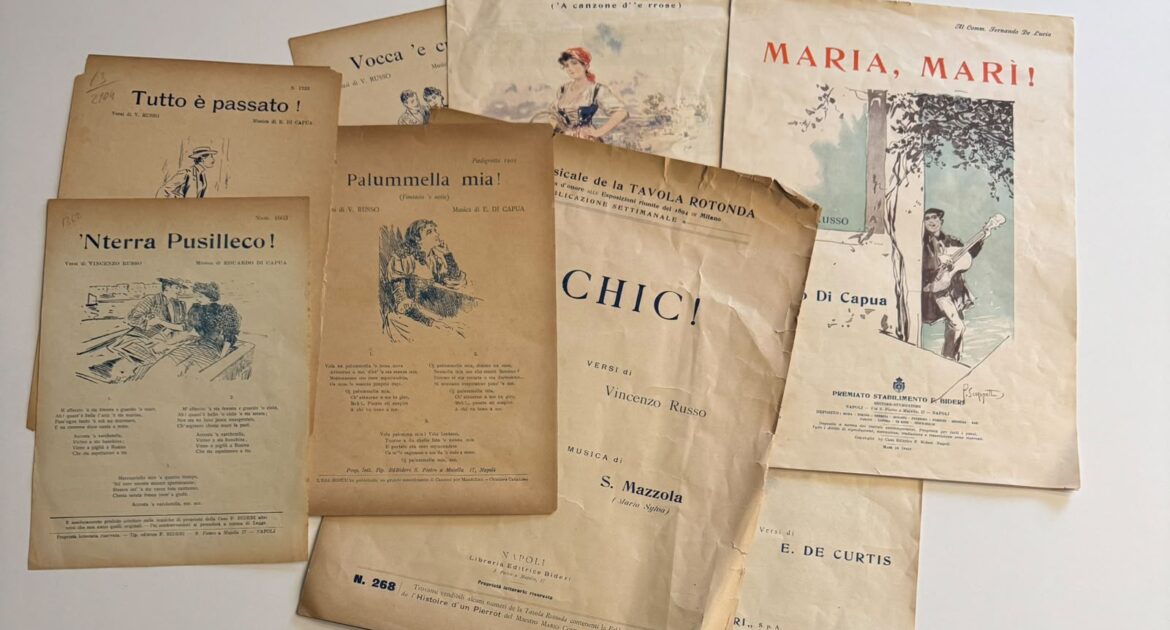
“Vestire la canzone”: Napulitanata omaggia Vincenzino Russo
“Vestire la canzone”: Napulitanata omaggia Vincenzino Russo A partire dal 19 ottobre, ore 18:30, Napulitanata ricorderà Vincenzino Russo con “Vestire la canzone”, mostra in onore dei 150 anni dalla sua nascita. Il progetto propone una mostra documentaria fondata su copielle e spartiti a stampa dell’autore, che si annovera tra gli artisti più prolifici della canzone […]
Read More
Napulitanata: Napoli in una canzone
Napulitanata: Napoli in una canzone Ci sono opere che descrivono una città e altre che finiscono per rappresentarla. “Napulitanata”, scritta da Salvatore Di Giacomo e musicata da Mario Costa, appartiene decisamente alla seconda categoria: è riuscita infatti a costruire un’immagine poetica della città di Napoli che è rimasta nel tempo. Per comprenderne realmente il significato […]
Read More Piazza Museo Nazionale 10-11, Napoli

